
ADAS calibration after a windscreen replacement
When a new windscreen means the camera must be calibrated, static and dynamic calibration explained, and what fleets and insurers should ask for. UK guide.
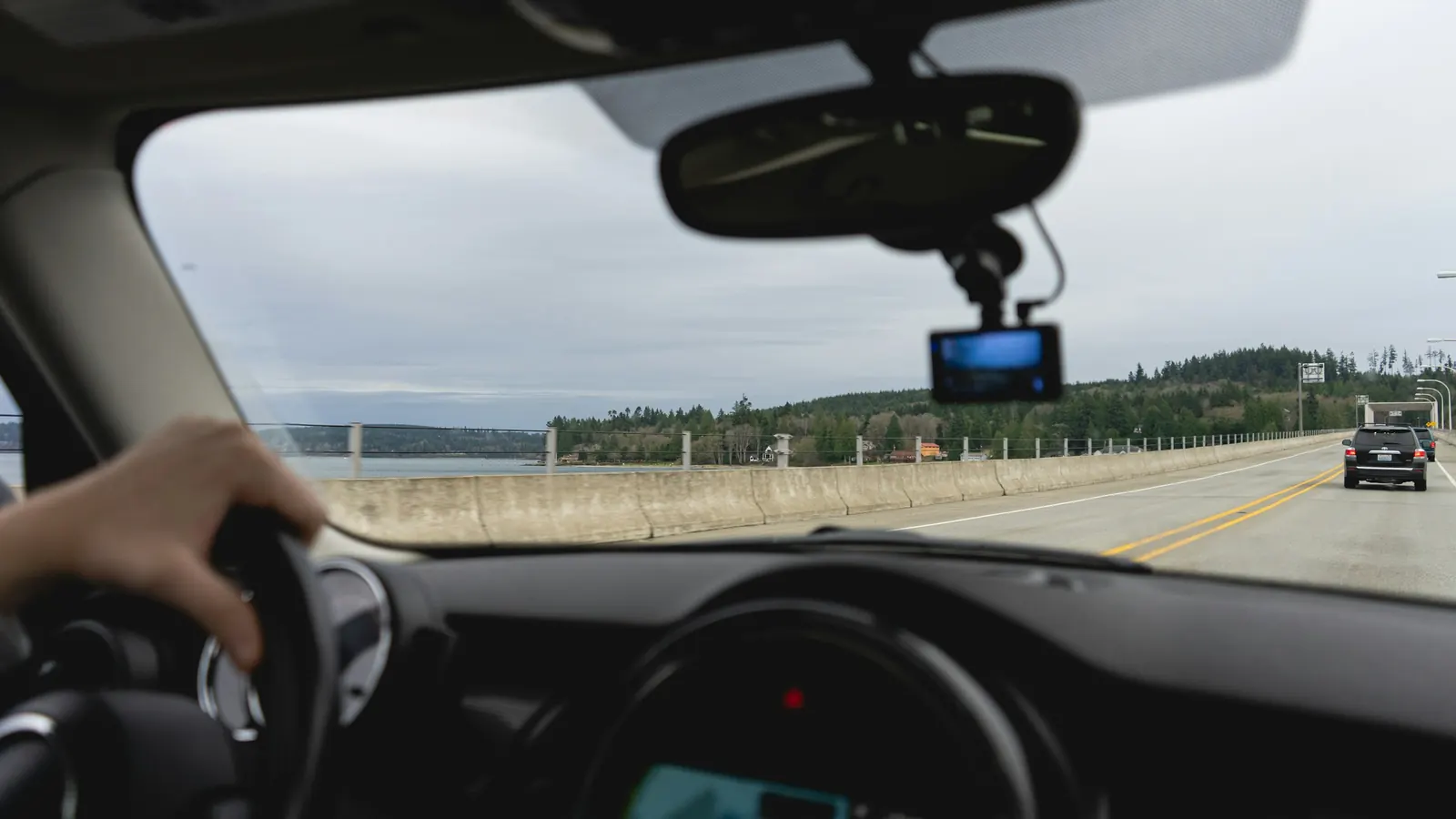
If a car has a forward-facing camera mounted on the windscreen, it will usually need ADAS calibration after a windscreen replacement. Whether it is needed, and whether it is done with targets in a workshop (static), on the road (dynamic) or both, is set by the vehicle maker's procedure for that car. UK insurers expect the work to be recorded and the result to show the camera is back within the maker's specification.
What ADAS is and why the windscreen matters
ADAS stands for advanced driver assistance systems. These are the features that watch the road and warn the driver or step in: lane keeping and lane departure warning, traffic sign recognition, and autonomous emergency braking (AEB) are the ones most often tied to the windscreen.
Many of them rely on a forward-facing camera mounted at the top of the windscreen, near the rear-view mirror. The camera looks through the glass, and it is held in a bracket fixed to the glass. When you replace the windscreen, you remove the camera, fit a new screen with its own bracket, and refit the camera. The camera is now in a slightly different place, looking through a different piece of glass. Calibration is how the car is told exactly where the camera is pointing again.
Small errors matter. A 2017 report of testing by the US Insurance Institute for Highway Safety, published by I-CAR, found that a camera bracket misaligned by as little as 1 degree on a Honda with a replacement windshield delayed collision braking and gave bad lane departure readings.
How do I know if I have an ADAS windscreen?
An "ADAS windscreen" is simply a screen with a camera, or a bracket for one, in the area behind the mirror. Signs to look for:
- A camera housing or cover behind the rear-view mirror.
- Features in the handbook or settings menu such as lane keeping, traffic sign recognition, adaptive cruise control or automatic emergency braking.
- A lane or traffic sign symbol on the instrument cluster when driving.
Be careful with lookalikes. The same model can be built with a plain mirror area, a rain and light sensor only, or a full camera bracket, and each is a different windscreen. We explain this in rain sensor and camera bracket windscreens and different windscreens for the same model. The safest check is to identify the vehicle exactly and look at the glass that is on the car before you order.
Does my car need ADAS calibration after windscreen replacement?
The vehicle maker decides, not the fitter and not the customer. Makers publish the procedure for each model, and for windscreen-mounted cameras it often includes calibration after the glass is changed. Two examples from makers' own documents:
- Ford's collision position statement (May 2026) counts glass in a sensor's field of view as an ADAS-related repair and requires calibration "regardless of whether a Diagnostic Trouble Code" is present.
- Tesla's Model Y service manual says calibration data must be cleared after a windshield replacement, and that self-calibration can take up to 100 miles of manual driving.
The glass itself also plays a part. The camera looks through it, so the position of the bracket and the optical quality of the glass in front of the lens both matter. Some makers, Ford among them, say a windscreen they have not approved can distort the camera's view. For the wider question of which glass to fit, see OEM, OEE and aftermarket glass.
What happens if calibration is skipped
Do not rely on a warning light to tell you. Ford's statement notes that some ADAS sensors may not trigger a fault code if misaligned, and that failing to calibrate can leave a car with compromised or inoperative ADAS features. A camera that is slightly out can still work, but see the lane edge or the car ahead in the wrong place. That can mean braking that comes late, or lane warnings at the wrong time. For a fitter, it is also a liability question: you returned the car to the road.
Static vs dynamic calibration
There are two main ways to calibrate a camera. Most vehicles need one or the other, and some need both.
| Static | Dynamic | |
|---|---|---|
| Where | In a workshop, car stationary | On the road |
| What it needs | A diagnostic tool, a target board and fixture, set level at measured distances from the car, on a flat floor with enough space | A diagnostic tool to start the routine, then a set drive |
| How long | Depends on the set-up and the car | A drive at set speeds; one equipment maker quotes 5 to 30 miles, and one vehicle maker allows up to 100 miles |
| What can stop it | A floor that is not flat, or targets in the wrong position | Bad weather, or the wrong type or condition of road |
The maker's procedure also sets the conditions to meet before you start. Follow it as written. A mobile fitter can complete a dynamic calibration on the road, but a static calibration needs the space, a suitable floor and the targets, so plan where it will happen.
Windscreen calibration in the UK: what the industry guidance says
In the UK, the main benchmark for windscreen calibration comes from the insurance industry and the trade bodies.
- Thatcham Research code of practice (2016). Thatcham, working with windscreen and repair companies, issued a voluntary code of practice for recalibrating ADAS when windscreens are replaced or refitted. It covered identifying the ADAS on a car, communicating clearly with the customer, and calibration options, scheduling and pricing.
- Thatcham's position (2019). Thatcham Research said that where ADAS sensors, or parts close to them, are part of a repair, calibration afterwards must be completed and must confirm the sensors work to the vehicle maker's tolerances. Repairers should be able to show that it was done.
- Insurance Industry Requirements (IIR). Thatcham later produced the UK Insurance Industry Requirements for the safe repair of ADAS-equipped vehicles on behalf of insurers. Compliance became essential from 31 March 2021. The IIR apply whenever a repair involves ADAS sensors or parts likely to affect them, which will normally include a windscreen that carries a camera.
- IMI accreditation. The Institute of the Motor Industry launched an ADAS accreditation in 2018, and offers a Level 2 Technical Specialist award in ADAS calibration. It is one way for a technician to show competence.
The IIR expect a repairer to:
- identify whether the car has ADAS, and record it;
- where it does, make sure the repair procedure says whether inspection, realignment and calibration are needed, and why;
- complete the calibration the procedure calls for, carried out by a currently competent person;
- make sure the results confirm the sensors work within the vehicle maker's technical specification;
- produce fully verifiable and auditable records, with a copy to the vehicle owner or work provider.
What fleets and insurers should ask for
If you manage a fleet or handle claims, the IIR give you a fair list of what to expect back after a windscreen is replaced on an ADAS car. Ask for a calibration report that shows:
- The vehicle (VIN and registration) and the date and mileage of the work.
- Which ADAS systems were found and which were calibrated.
- The method used (static, dynamic or both) and that it followed the vehicle maker's procedure.
- The result: a pass that shows the camera is within the maker's specification, not just "done".
- Who carried it out, and their competence, such as IMI ADAS accreditation.
- Any fault codes found before and after the work.
Also check where the calibration happens. If the fitter cannot calibrate on site, the car may need to go to a calibration centre or a dealer before it goes back into service. Plan for that time in the booking. Our FAQ explains what the calibration tag on a VINtoGlass result means.
Before you order
- Identify the car from its VIN: the model name and year will not tell you whether it has a camera.
- Look behind the mirror: camera, sensor only, or nothing.
- Check the glass on the car matches the screen you are ordering, including the bracket.
- Find out from the vehicle maker's procedure whether calibration is needed, and whether it is static, dynamic or both.
- Book the calibration with the fit, so the car is not handed back without it.
- Keep the calibration report and send a copy to the owner or work provider.
- If the car also has a head-up display, read head-up display windscreens first.
More guides
-
Acoustic and solar windscreens
Quieter and cooler glass: what it is, how to recognise it, and why the swap matters.
-
Head-up display windscreens
Why a standard screen gives a double image, and how to recognise a HUD screen.
-
Windscreen markings explained
The stamp in the corner of the glass, line by line, and what it can and cannot tell you.