
Rain sensor, light sensor and camera windscreens
Why rain sensors, light sensors and cameras stop working after a new windscreen: brackets, gel pads, sensor areas and screens that look alike but are not.
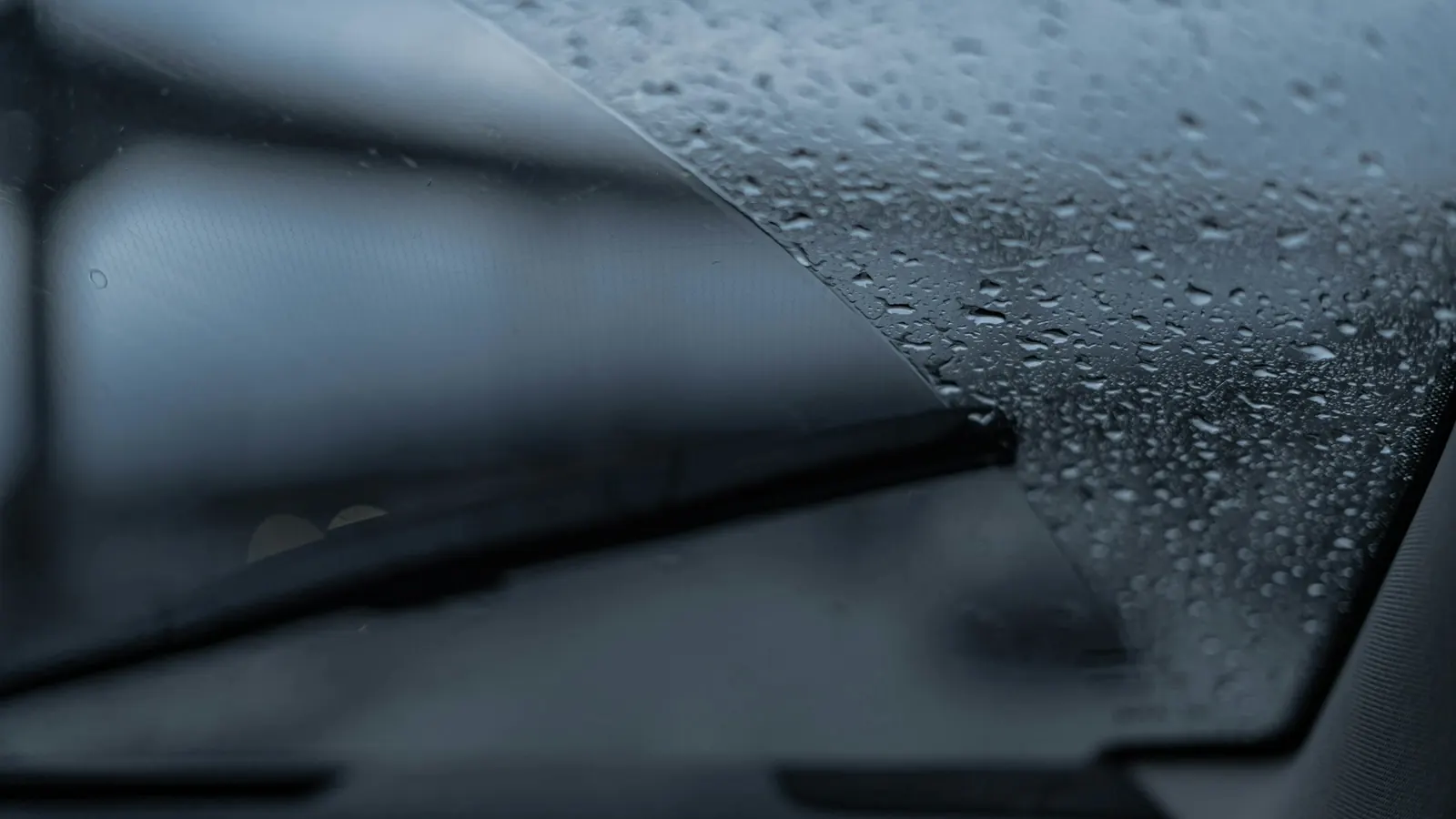
When a rain sensor, light sensor or camera stops working after a windscreen replacement, the cause is usually one of three things: the new screen is not the right variant for that car, the sensor is not sitting properly on the glass, or the car needs the sensor or camera setting up again. All of these parts look through the windscreen, so the screen has to be made for them and they have to be refitted with care.
What is fitted to the inside of the windscreen?
Depending on the model and its options, the area behind the interior mirror may hold:
- Rain sensor. An optical sensor that looks through the glass for water on the outside and runs the wipers in auto mode. Owner's manuals typically place it at the top of the windscreen, in front of the mirror.
- Light sensor. Used for automatic headlights. It is often combined with the rain sensor in a single rain/light sensor unit.
- Humidity sensor. On some cars a humidity and temperature sensor sits in the base of the interior mirror, so the climate control can stop the windows misting up.
- Forward camera. Used by systems such as lane keeping, automatic high beam and emergency braking. It is mounted at the top of the screen near the mirror.
- Radar or laser sensor. Some cars put these behind the glass too. Volvo, for example, places a radar sensor with the camera on the upper inside of the windshield, and some Mazda models have a laser sensor at the top of the windscreen.
- Mirror mount. On many cars the interior mirror fits to a mount on the glass.
Each of these needs something on the glass to hold it, and most need a clear, undistorted view through it.
Brackets come bonded to the new screen
Sensors and cameras are not glued straight to the glass. They clip into brackets or mounts that are bonded to the windscreen when it is made. When you replace the screen, the sensor or camera comes off the old glass and clips into the bracket on the new one.
That bracket matters more than it looks. Ford has said that non-original brackets can place the camera in the wrong position. A camera that sits even slightly out of place sees the road from the wrong angle.
It also means a screen without the right bracket gives you nowhere to put the sensor or camera. Bonding a bracket on by hand is not the same as a bracket fitted in the factory to the maker's position.
Screens with and without a sensor area can look alike
The same model is often sold with and without a rain sensor, and with or without a camera. Manuals list rain sensors as "where fitted" for exactly this reason. The windscreens for each version are different parts, but at a glance they can look much the same: same shape, same size, same tint.
The differences are near the top of the glass:
- the brackets or mounts bonded to the inside;
- the black ceramic band (the frit) around the mirror area, which usually has a clear window cut into it where a sensor or camera looks through;
- on camera screens, the shape and size of that clear area, which is made to keep the frit out of the camera's view.
A screen from a car without a sensor may have solid black frit where the sensor needs to see, or no bracket at all. Volvo tells owners to have a workshop check that the right windscreen has been ordered before it is replaced, and says its camera and radar systems are sensitive to the optical and geometric tolerances of the glass. Our guide on how screens for one model can differ explains the other ways variants differ.
The gel pad: why the sensor must sit perfectly on the glass
A rain/light sensor does not just rest against the windscreen. It is joined to the glass by a clear gel or adhesive pad, often called the coupling pad or optical element. Light has to pass from the sensor, through the pad and into the glass without interruption. If it cannot, the sensor cannot measure properly.
A sensor maker's technical guidance on refitting a sensor is clear about how sensitive this is. It says that even the smallest irregularities in the pad, such as air bubbles, trapped dust or a pad that is not fully formed against the glass, will cause the sensor to malfunction. It also warns that the pad should not be moved once it is on the windscreen, and concludes that fitting a new original optical element is a better choice than trying to refill or reuse an old one.
In practice that means:
- fit a new pad rather than reusing the old one;
- clean the sensor area of the new glass and keep fingers off it;
- press the pad on once, firmly and evenly, with no air bubbles;
- make sure the sensor clips fully into its bracket so it is held against the pad.
Dirt on the glass matters too. Nissan's manual warns that dirt, fingerprints, an oil film or insects over the sensor area can make the wipers run unexpectedly, and Mazda's warns that a sticker or label over the sensor will stop it working correctly.
Rain sensor not working after windscreen replacement: the signs
These are the problems drivers notice when a sensor or camera screen is wrong or badly fitted, and the first things to check.
| What the driver notices | What to check |
|---|---|
| Wipers do nothing in auto mode, or react late | Sensor clipped fully into its bracket, pad bubble-free and in full contact, correct screen with a clear sensor window |
| Wipers keep wiping on a dry screen | Bubbles or dust in the pad, dirt or film on the glass over the sensor, sensor not set up for the new glass |
| Headlights no longer switch on by themselves | Light sensor seated and coupled to the glass, nothing covering the sensor area |
| Camera warning, or lane or braking assistance switched off | Correct screen and bracket, glass in front of the camera clean, camera calibrated |
Volvo's manual describes what drivers see when the camera's view is not right: a message that the windscreen sensor is blocked, and functions that may be reduced, switched off or give an incorrect response (Volvo support: camera and radar sensor limitations).
Re-initialising sensors and calibrating cameras
A perfectly fitted sensor may still need setting up. On some cars the rain sensor has to be set up again with diagnostic equipment after a new screen goes in. Check the vehicle maker's procedure.
Cameras and windscreen-mounted radar are a bigger job. Volvo states that the camera and radar sensor must be recalibrated after the windscreen is replaced, and Mazda recommends that windscreen replacement on cars with its forward camera is done by an expert repairer. Our guide to ADAS calibration after a windscreen replacement covers when calibration is needed and the difference between static and dynamic calibration. You can also see how we flag calibration in our questions and answers.
Some screens with sensors and cameras also have other features in the same area, such as a heated patch in front of the camera or a coating that changes how the glass behaves. See heated windscreens for more on heated variants.
Before you order
- Look behind the mirror on the car itself. Note every sensor, camera and bracket, and the shape of the clear window in the black band.
- Ask the driver which features the car has: auto wipers, auto headlights, lane or braking assistance.
- Use the VIN, not the badge on the tailgate, to identify the car.
- Make sure your lookup lists the screens with and without a sensor area as separate options, so a sensor screen is not swapped for a plain one.
- Order a new gel pad or coupling pad for the rain/light sensor.
- Check whether the car needs the sensor re-initialised or the camera calibrated, and book it before the car goes back.
- Test auto wipers and auto lights before handing the car back, and check for warnings on the dashboard.
More guides
-
Acoustic and solar windscreens
Quieter and cooler glass: what it is, how to recognise it, and why the swap matters.
-
Head-up display windscreens
Why a standard screen gives a double image, and how to recognise a HUD screen.
-
Windscreen markings explained
The stamp in the corner of the glass, line by line, and what it can and cannot tell you.